This Is Someone's Country, Not a Backdrop
Most guidance on visiting respectfully is either vague or preachy. The park itself is neither: it makes a small number of specific requests, and they are the whole of what a visitor needs to know.
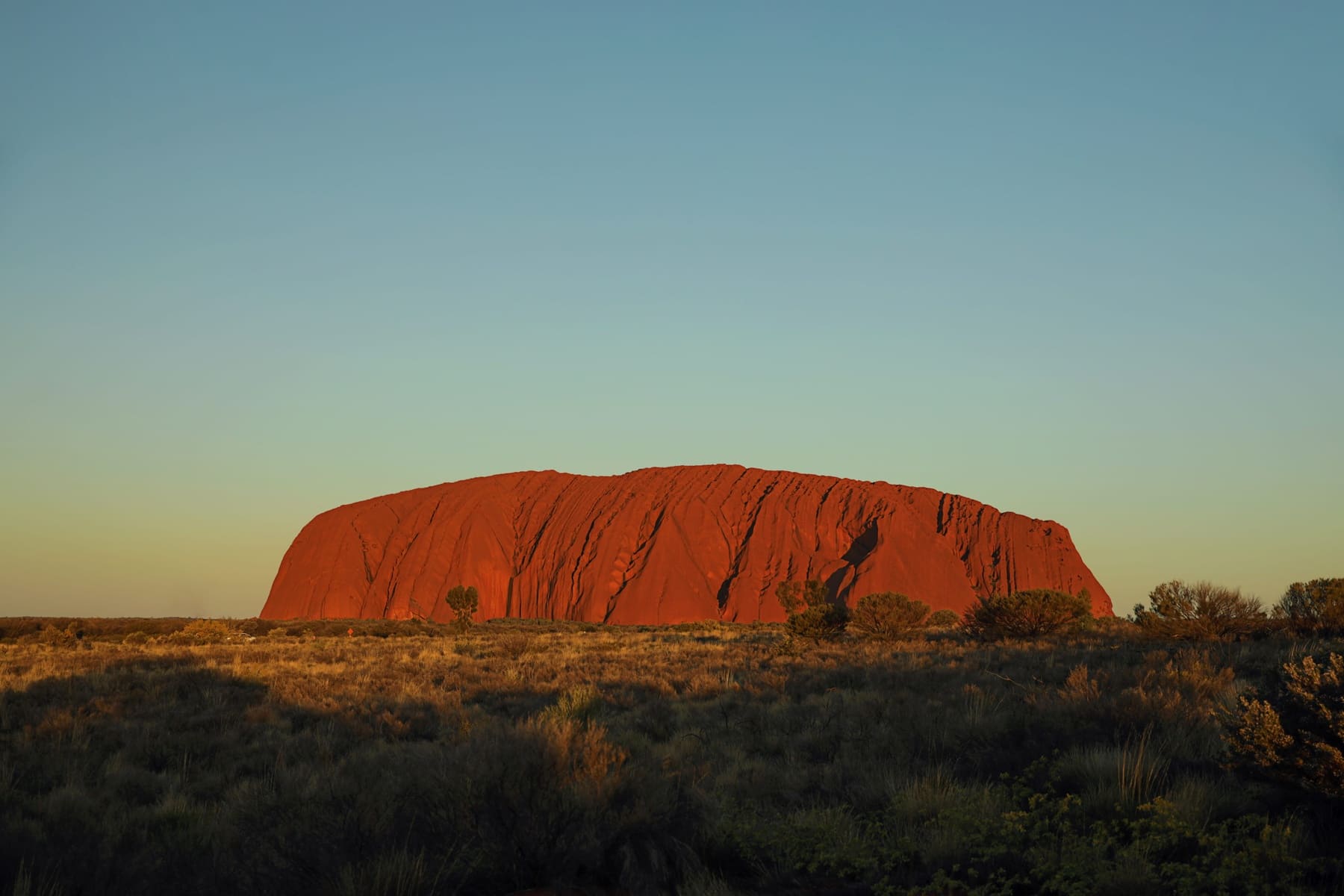
What joint management means
The park was handed back to its Traditional Owners in 1985 and leased back to the Commonwealth on a long fixed term. It is run by a board with an Aṉangu majority, which means the decisions visitors notice — the climb closure, the restrictions on photography, the layout of the tracks — are made by people with a continuing connection to the place rather than by a tourism authority.
That is the structural fact behind every rule here, and knowing it changes how the rules read. They are not arbitrary safety measures with cultural decoration attached. They are the conditions on which this place is open to visitors at all.
The requests, in full
- Stay on the marked tracks. This covers everything: shortcuts, photo detours, and the urge to get closer.
- Do not photograph where signage asks you not to. That applies to publishing as well as taking.
- Do not climb. The route closed in 2019 and climbing is now an offence under the EPBC Act.
- Do not enter waterholes. They are cultural sites, not swimming spots.
- Take your rubbish out. Bins are not provided around the walks.
That is the list. There is no additional etiquette to memorise, no protocol to rehearse, and no requirement to demonstrate understanding. Following the tracks and the signs is the whole of it.
Kata Tjuṯa specifically
Kata Tjuṯa is an Aṉangu men's site. The park states this plainly and does not elaborate, and the elaboration is not ours to supply either. Practically, it means staying on the track, not photographing where signs ask you not to, and not treating the valley between the domes as a place to explore off-route.
If you ask a ranger what a restriction means and they decline to explain, that is the policy working rather than an unhelpful answer. The information is held by people who have chosen not to publish it, and the choice is theirs.
Where to learn more, properly
The Cultural Centre inside the park is the place the park itself points visitors to. It carries Aṉangu-authored interpretation, which is a different thing from interpretation about Aṉangu people, and it is the only food inside the park. The ranger-guided walks run from there and are worth the time.
Both are inside the park pass, so there is no separate decision to make about whether they are worth the money. They are the part of the trip that makes the rest of it legible.
The practical consequence for your itinerary
Respectful visiting is not slower or more restricted than the alternative — it is just differently organised. The base walk replaces the climb and is better. The Cultural Centre fills the hot middle of the day. The waterholes reward stopping rather than passing.
If the trip is a long drive to get here, that reshaping matters more, not less. driven from Melbourne in a campervan is a two-day approach, and arriving after that drive is exactly when people are tempted to treat the park as a checklist. campervan pick-up points across Australia is worth checking if you have not fixed where the trip starts, because a shorter approach leaves more room for the part of the visit that is not driving.
The requests are few and they are not difficult. What is being asked is not that visitors understand everything about this place, but that they accept the terms on which they are allowed to be here.
Questions people ask
What should visitors not do at Uluṟu?
Do not climb (closed since 2019 and now an offence), do not leave the marked tracks, do not photograph where signage asks you not to, do not enter the waterholes, and take your rubbish out.
Who manages Uluṟu-Kata Tjuṯa?
A board with an Aṉangu majority, jointly with Parks Australia. The park was handed back to its Traditional Owners in 1985 and leased back to the Commonwealth for 99 years.
Why will rangers not explain some restrictions?
Because explaining them would disclose information Aṉangu have chosen to keep private. Following the signage is the whole of what is asked of visitors.
Where can you learn about Aṉangu culture?
The Cultural Centre inside the park, which carries Aṉangu-authored interpretation, and the ranger-guided walks that run from it. Both are covered by the park pass.
Where this came from
Distances, surfaces, permit rules and park hours change. Check the authority above before you rely on any of it for a specific date.