When to Come: Four Seasons, Four Different Trips
Parks Australia puts the best window at May to September, with maximums between 20 and 30 °C. That is correct and it is also the busiest and most expensive period. The other three windows are not worse — they are different trips, and each one asks something specific of you.
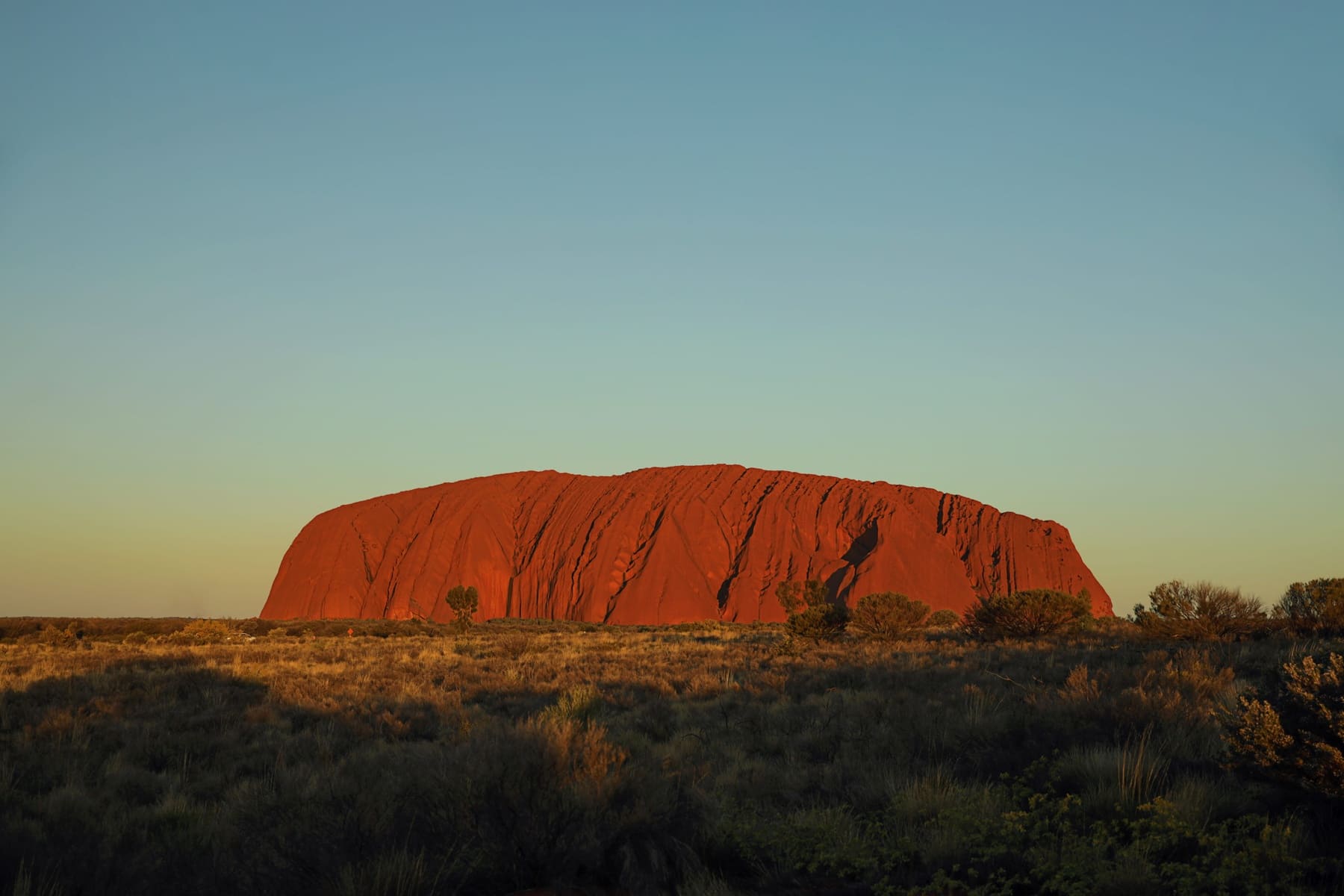
May to September: the window, and its cost
This is the period the park itself recommends: daytime maximums between 20 and 30 °C, little rain, and wildflowers in the later part of it. Every walk is open, the heat rules rarely trigger, and the light is clean.
It is also when everyone comes. Accommodation at Yulara books out, the campground fills, and the viewing areas are crowded at both ends of the day. The trade is straightforward: you get the best conditions and you share them.
Nights are genuinely cold, which surprises people who packed for desert heat. Below freezing is not unusual in June and July, and a campervan without adequate bedding is a bad night rather than an adventure.
October to November: heat builds
Maximums regularly exceed 35 °C and the heat rules start to bite. This is the period when the 36 °C thresholds at Watarrka and Kata Tjuṯa begin to trigger, which means the rim walk wants a pre-9am start and the Valley of the Winds beyond Karu closes at 11am.
What you get in exchange is quieter roads and better light for photography, because the shoulder season has fewer people competing for the same viewpoints. What you give up is flexibility: a late start is no longer an option, and the day has to be built around the first four hours.
December to March: the storm season
This is the hottest and wettest period, and it produces the images that make people want to come: waterfalls running off the rock, waterholes full, the country green. It is spectacular and it is the least forgiving time to walk.
The heat rules are in force more often than not, which means the walks happen at dawn or not at all. Roads can close after rain — unsealed sections especially, and the Mereenie Loop can be shut for days. The trade here is real: you get the country at its most dramatic and you accept that the plan may change.
April: the shoulder that is not really a shoulder
April is often described as a shoulder month and is in practice one of the best. Heat eases, the country is still green from summer rain, and the crowds have gone. It does not have the reliability of May or the drama of February, but it has most of the advantages of both and few of the costs.
If you have flexibility and no fixed dates, April is the month worth aiming at, and it is the one least likely to be fully booked six months out.
Choosing by what you actually want
- Every walk open, no restrictions: July or August, booked well ahead.
- Photography light and quiet roads: October, with dawn starts.
- Waterfalls and green country: February, accepting closures and heat.
- Best balance of conditions and space: April.
- Cold nights and clear skies: June, with proper bedding.
The season also determines the vehicle decision more than people expect. A winter trip means cold nights and no shade problem; a summer trip means the vehicle is somewhere to sleep at 4am and to escape the afternoon, which changes what you want from it. If you are booking for the cool months, Melbourne campervan hire for the cool months is the version where the vehicle is a base rather than a refuge. If you are going in January and know it, booked a campervan for a January trip should include a plan for the middle of the day that does not involve being outside.
There is no month that gives you everything. There is a month that gives you what you came for, and knowing which one that is takes one honest look at what you actually plan to do each day.
Questions people ask
What is the best month to visit Uluṟu?
May to September is the park's own recommendation, with maximums between 20 and 30 °C and little rain. April is the best of the shoulder months and is often overlooked.
Is it too hot in January?
It is very hot, and the walks happen at dawn or not at all. The heat rules trigger often. The country is at its most dramatic then, with waterfalls and full waterholes, so it is a trade rather than a mistake.
How cold does it get at night?
Below freezing is not unusual in June and July. People who packed for desert heat are often caught out. If you are sleeping in a vehicle, adequate bedding is not optional.
Do the heat rules depend on the month?
No. They are triggered by forecast temperature — 36 °C at Watarrka and Kata Tjuṯa, 40 °C for specific closures at Uluṟu. A cool February week can leave everything open; a hot October week can close the rim walk at 9am.
Where this came from
- Parks Australia — weather and seasons
- Parks Australia — access and alerts
- NT Parks — Watarrka National Park
Distances, surfaces, permit rules and park hours change. Check the authority above before you rely on any of it for a specific date.